Category: Expat Life

  • Best CRM Software For UK Expat Businesses: Navigating Global Operations with Local Efficiency

    Introduction: The Unique Landscape of the UK Expat Entrepreneur

    For British citizens running businesses from abroad, the challenges of entrepreneurship are magnified by geographical distance, varying time zones, and complex regulatory environments. Whether managing a consultancy from Dubai, a retail operation from Spain, or a tech startup from Southeast Asia, the need for a robust Customer Relationship Management (CRM) system is paramount. A CRM is not merely a digital Rolodex; it is the central nervous system of a modern business, especially one that operates across borders. For UK expat businesses, the right software must bridge the gap between their current location and their primary market or administrative base in the United Kingdom.

    The Importance of a Specialized CRM for Expats

    Operating as an expat means dealing with multi-currency transactions, compliance with the UK’s General Data Protection Regulation (UK GDPR), and often, managing a remote team spread across different continents. A standard CRM might offer basic contact management, but an expat business requires features that support global scalability while maintaining a local touch. The ideal solution provides seamless integration with accounting software popular in the UK, such as Xero or QuickBooks, and ensures that data privacy standards are upheld regardless of where the business owner is physically located.

    1. Salesforce: The Gold Standard for Global Scalability

    Salesforce remains the dominant force in the CRM market for a reason. Its sheer depth of customization makes it an excellent choice for UK expat businesses that anticipate significant growth. As a cloud-native platform, Salesforce allows expat entrepreneurs to access their entire business ecosystem from any corner of the globe without the need for cumbersome VPNs or on-premise servers.

    One of the standout features for expats is its sophisticated multi-currency management. Salesforce can automatically update exchange rates and calculate revenues across different currencies, which is vital for businesses billing in GBP while operating in another local currency. Furthermore, its ‘AppExchange’ provides thousands of third-party integrations that can help bridge the gap between international logistics and UK-based financial reporting.

    [IMAGE_PROMPT: A professional high-tech workspace featuring a laptop displaying a global CRM dashboard with real-time analytics, world maps, and currency conversion widgets, aesthetic and modern corporate style.]

    2. HubSpot: User-Centric Design for Remote Marketing

    HubSpot is frequently the preferred choice for expat businesses that prioritize inbound marketing and ease of use. For the solo entrepreneur or a small team operating from abroad, HubSpot’s intuitive interface reduces the learning curve significantly. Its ‘Freemium’ model allows startups to begin organizing their leads without an initial heavy financial commitment, which is often a priority for those navigating the costs of international relocation.

    For UK expats, HubSpot’s strength lies in its integrated marketing suite. You can manage email campaigns, social media, and blog content targeted at a UK audience while sitting in a different time zone. The platform’s automated scheduling tools ensure that marketing communications land in a British client’s inbox at 9:00 AM GMT, regardless of whether the business owner is currently in New York or Tokyo. Its transparency in tracking the customer journey provides invaluable insights into how UK prospects are interacting with the brand from afar.

    3. Zoho CRM: Cost-Effective Multi-Regional Management

    Zoho CRM offers a compelling value proposition for expat businesses that need a comprehensive suite of tools without the premium price tag of Salesforce. Zoho’s ecosystem is particularly beneficial because it includes integrated modules for accounting (Zoho Books), which are fully compatible with UK VAT requirements and ‘Making Tax Digital’ (MTD) standards.

    Expat entrepreneurs often find Zoho’s ‘Zia’ AI assistant helpful for predicting sales trends and identifying the best times to contact leads. Additionally, Zoho allows for extensive localization. A business owner can maintain the interface in English while setting up local language modules for staff hired in their country of residence. This dual-capability makes it a powerhouse for those building hybrid teams that consist of both UK-based contractors and local employees.

    [IMAGE_PROMPT: A British expatriate entrepreneur working on a tablet at a coastal cafe in a Mediterranean setting, showing a clean CRM interface on the screen with a cup of tea and a notebook nearby.]

    4. Pipedrive: Focused Sales Pipelines for Lean Operations

    Pipedrive is designed with a ‘sales-first’ philosophy. For expat businesses focused on high-ticket sales or consultancy—where closing deals is the primary objective—Pipedrive’s visual pipelines are unmatched. It strips away the clutter often found in larger CRM platforms, focusing instead on the actions that move a lead from ‘prospect’ to ‘closed-won.’

    For the expat, Pipedrive’s mobile application is a significant asset. It is highly optimized for performance on the go, allowing entrepreneurs to update deal statuses while traveling or attending international networking events. The platform also offers robust integration with Google Workspace and Microsoft 365, which are standard for most UK-linked businesses. Its ability to track ‘Activities’ ensures that no follow-up with a UK client is missed due to time zone fatigue.

    5. Monday Sales CRM: Customization and Visual Project Management

    While originally known for project management, Monday.com has evolved into a formidable CRM player. Monday Sales CRM is ideal for expat businesses that manage complex projects alongside their sales cycles, such as construction, event planning, or creative agencies. Its highly visual ‘Boards’ allow for a level of transparency that is crucial for remote teams.

    Expats benefit from the platform’s automation recipes, which can handle repetitive tasks like sending internal notifications when a UK lead reaches a certain stage or moving data between boards automatically. This reduces the administrative burden on the business owner, allowing them to focus on high-level strategy and navigating the nuances of their host country’s business culture while maintaining a firm grip on their UK operations.

    Critical Considerations for Expat CRM Selection

    GDPR and Data Residency

    One of the most critical factors for any UK expat business is maintaining compliance with the UK GDPR. Even if you are based outside the UK, if you are processing the data of UK citizens, you must adhere to these regulations. When choosing a CRM, ensure the provider has data centers in the UK or the EU, or at the very least, offers a robust Data Processing Agreement (DPA) that satisfies the requirements for international data transfers.

    Integration with UK Financial Ecosystems

    An expat business is often a ‘dual-headed’ entity. It must comply with local tax laws in the host country and potentially UK tax laws if the company is registered in England and Wales. Therefore, your CRM must talk to your accounting software. Look for native integrations with Xero, which is the gold standard for UK small business accounting. A CRM that can sync invoices and payment statuses directly with Xero will save dozens of hours of manual data entry and minimize the risk of errors in your annual returns to HMRC.

    Support and Time Zones

    Consider the support hours of the CRM provider. If you are an expat in Australia but your CRM’s support team only operates on US Eastern Time, you may face significant delays when technical issues arise. Opt for providers that offer 24/7 global support or have a strong presence in both the UK and your current region.

    Conclusion: Making the Right Choice

    Selecting the best CRM for a UK expat business is a strategic decision that depends on the scale of your operations and the complexity of your sales process. Salesforce is the choice for those building a global empire; HubSpot is the master of marketing and ease; Zoho offers the best value-for-money with UK accounting compatibility; Pipedrive is for the pure salesperson; and Monday.com is for the project-oriented leader.

    Ultimately, the goal is to choose a platform that makes the thousands of miles between you and your clients feel non-existent. By leveraging these tools, UK expat entrepreneurs can build resilient, efficient, and highly profitable businesses that thrive in the global marketplace while maintaining their British roots and standards.


  • Navigating The British Tax Labyrinth: Why Uk Accounting Services Are Essential For Expats

    Navigating The British Tax Labyrinth: Why Uk Accounting Services Are Essential For Expats

    Moving to the United Kingdom is an exciting milestone. Whether you are drawn by the vibrant financial hub of London, the rich cultural history, or prestigious career opportunities, relocating to the UK represents a significant personal and professional leap. However, beneath the surface of this transition lies one of the world’s most intricate financial environments. Navigating the British tax labyrinth is notoriously challenging, particularly for expatriates who must reconcile their global financial footprints with the strict regulations of Her Majesty’s Revenue and Customs (HMRC).

    For expats, tax compliance is rarely as simple as filing a single annual return. It involves a web of international treaties, shifting residency definitions, and unique asset structures. To avoid costly penalties and optimize financial efficiency, securing specialized UK accounting services is not just a convenience—it is an absolute necessity.

    The Complexity of the UK Tax System for Expats

    The UK tax framework is built upon centuries of legislation, constantly updated by annual Finance Acts. For foreign nationals living and working in the UK, understanding their tax obligations requires a deep dive into complex statutory definitions that differ significantly from those in other jurisdictions.

    The Crucial Distinction: Residency vs. Domicile

    In many countries, residency and domicile are used interchangeably. In the UK, however, they are distinct legal concepts with profound tax implications:

    • Residency: This is a dynamic status determined annually by the physical time you spend in the country and your structural ties to the UK. It dictates whether you are liable for UK tax on your worldwide income.
    • Domicile: Typically defined as the country you consider your permanent home, domicile is usually acquired at birth (domicile of origin). It is much harder to change and heavily influences how your foreign assets and estate are taxed under UK Inheritance Tax (IHT) rules.
    • Understanding how these two statuses interact is critical. For example, non-domiciled individuals (“non-doms”) have historically been eligible to claim the “remittance basis” of taxation, allowing them to keep foreign income and capital gains tax-free, provided those funds are not brought into the UK. However, navigating these rules requires expert precision, especially with ongoing legislative reforms targeting the non-dom regime.

      A professional expat sitting at a wooden desk in a London apartment, looking at complex tax documents on a laptop with the Tower Bridge visible through the window, professional and slightly overwhelmed expression, realistic style, 4k

      Decoding the Statutory Residence Test (SRT)

      Determining your tax residency status in the UK is no longer a matter of simply counting 183 days. Since 2013, HMRC has utilized the highly structured Statutory Residence Test (SRT). The SRT is a multi-layered flowchart consisting of:

      1. The Automatic Overseas Tests: If you meet any of these, you are automatically non-resident.
      2. The Automatic UK Tests: If you fail the overseas tests but meet these, you are automatically resident.
      3. The Sufficient Ties Test: If your status is still undetermined, HMRC evaluates your connections to the UK (such as family, accommodation, work, and time spent in previous years) to establish your residency.

      Because the SRT is highly analytical, a single miscalculated day or misdefined “tie” can inadvertently classify you as a UK tax resident, exposing your entire global income to UK taxation.

      Key Financial Challenges Faced by Expats

      Without professional UK accounting services, expatriates frequently fall victim to structural blind spots that can lead to double taxation, missed opportunities, and severe regulatory audits.

      1. Double Taxation Risks

      Expats often retain financial ties to their home countries, such as rental properties, stock portfolios, or business interests. This creates a double taxation risk, where both the UK and your home country claim taxing rights over the same income.

      While the UK has a vast network of Double Taxation Treaties (DTTs) to prevent this, claiming relief is not automatic. It requires a detailed application of treaty articles, tax credit claims, and formal disclosures to HMRC. Professional UK accountants understand how to utilize these treaties to shield your foreign income from being taxed twice.

      2. Capital Gains Tax (CGT) on Global Assets

      If you sell an asset—whether it is real estate in your home country, shares, or digital assets—while residing in the UK, you may be subject to UK Capital Gains Tax. Navigating CGT involves calculating the acquisition cost, converting foreign currencies at historical exchange rates approved by HMRC, and understanding specific UK reliefs (such as Private Residence Relief if you sell a former home).

      3. Compliance and the Threat of HMRC Penalties

      HMRC has significantly increased its data-sharing capabilities through the Common Reporting Standard (CRS) and the Foreign Account Tax Compliance Act (FATCA). This means HMRC automatically receives financial data from bank accounts held worldwide. Unintentional non-disclosure of overseas income is no longer a viable defense. The penalties for non-compliance are severe, often ranging from 100% to 200% of the tax owed, alongside potential criminal prosecution.

      DIY Tax Filing vs. Professional UK Accounting Services

      Many expatriates attempt to manage their UK taxes independently using basic online software, only to realize too late that standard tools do not account for cross-border complexities.

      Feature / Scenario DIY Tax Filing Approach Professional UK Accounting Services
      Statutory Residence Test High risk of misinterpreting “ties” and physical days. Rigorous, legally defensible residency determination.
      Double Taxation Relief Often overlooked, leading to redundant tax payments. Optimized application of bilateral international treaties.
      Foreign Asset Disclosure High probability of missing mandatory HMRC forms. Thorough compliance via foreign income matching.
      Tax Optimization Restricted to basic personal allowances. Strategic wealth structuring and long-term tax mitigation.
      HMRC Audit Support Zero representation; high-stress direct interaction. Comprehensive representation and dispute resolution.

      “Navigating HMRC’s regulations is not merely an administrative chore; it is a sophisticated financial exercise where a single misstep can cost thousands of pounds in unnecessary liabilities or penalties. Professional oversight transforms tax from a source of anxiety into a strategic advantage.”

      The Strategic Value of Hiring a UK Expat Accountant

      An experienced UK accountant specializing in expatriate services provides value that extends far beyond filling out forms. They act as strategic financial partners, helping you structure your wealth efficiently during your time in the UK and preparing you for your eventual departure.

      A business meeting between an experienced UK accountant and an expat couple in a modern glass-walled office in London, showing financial charts on a tablet, confident and relieved expressions, professional photography, high-end corporate setting

      Custom Tax Planning for “Split Year” Transitions

      When you move to or leave the UK, you do not always have to pay tax on your global income for the entire tax year. Under certain conditions, you can apply for “Split Year Treatment,” dividing the tax year into a resident part and a non-resident part.

      Applying for split year treatment requires meeting strict criteria under the SRT. A UK accounting professional can structure your physical arrival and departure dates to align with these rules, potentially saving you thousands of pounds in tax on income earned before you set foot in the country.

      Optimizing Pension Transfers and Investments

      Many expats hold retirement accounts in their home countries (such as 401ks in the US or Superannuation in Australia). Transferring these assets or continuing to contribute to them while living in the UK carries unique tax implications. A specialized accountant can advise on recognized overseas pension schemes (QROPS) and ensure your investments do not trigger punitive tax charges.

      Pre-Departure Planning

      Your tax obligations do not automatically end when you pack your bags and leave the UK. You must formally notify HMRC, settle any outstanding liabilities, and understand how your UK assets (such as rented property left behind) will be taxed going forward. Pre-departure tax planning ensures a clean break, preventing lingering tax residency status from pulling your future global income back into the UK tax net.

      How to Choose the Right UK Accountant for Your Needs

      Not all accountants are equipped to handle the unique demands of expatriate taxation. When searching for a partner to guide you through the British tax labyrinth, consider the following credentials:

    • Qualifications: Ensure they are chartered professionals, holding qualifications from recognized bodies such as the Association of Chartered Certified Accountants (ACCA) or the Institute of Chartered Accountants in England and Wales (ICAEW).
    • Expat Specialization: Ask about their experience with cross-border taxation, double tax treaties, and the Statutory Residence Test. A high-street domestic accountant may not have the expertise required for international wealth.
    • Dual-Jurisdiction Knowledge: If you are a citizen of a country with strict citizenship-based taxation (like the United States), working with an accountant who understands both UK tax law and your home country’s tax code is invaluable.

    Conclusion: Secure Peace of Mind in the UK

    The UK offers incredible professional and personal opportunities for expats, but the complexity of its tax code can easily overshadow these benefits. Attempting to navigate the statutory residence test, double taxation treaties, and foreign asset disclosures without professional assistance is a high-risk strategy.

    By engaging professional UK accounting services, you secure more than just compliance; you gain peace of mind, financial clarity, and the strategic foresight needed to protect your global wealth. Let the experts manage the intricacies of the British tax labyrinth so you can focus on enjoying everything your new life in the United Kingdom has to offer.

  • Navigating the Maze: Comprehensive Guide to Tax Planning Services for Expats in the UK

    Navigating the Maze: Comprehensive Guide to Tax Planning Services for Expats in the UK

    Introduction: Navigating the Complexities of UK Expatriate Taxation

    Relocating to the United Kingdom offers exciting career prospects, historic cultural experiences, and access to robust financial markets. However, for foreign nationals, navigating the British tax system can be an incredibly daunting endeavor. The UK’s tax system is one of the most comprehensive and intricate in the world, governed by strict regulations, bilateral treaties, and rapidly evolving legislation. For expatriates, failing to understand these rules can lead to severe financial penalties, double taxation, and missed opportunities for wealth preservation.

    This is why professional tax planning services for expats in UK have become an indispensable resource. Whether you are a high-net-worth individual, a corporate executive on secondment, or a self-employed professional, proactive tax planning ensures that you remain fully compliant with His Majesty’s Revenue and Customs (HMRC) while legally minimizing your global tax liabilities.

    The Foundations of UK Expat Taxation: Residency and Domicile

    To effectively manage your taxes in the United Kingdom, you must first understand two fundamental concepts that dictate how you are taxed: Residency and Domicile. Unlike many other jurisdictions, these two statuses are treated entirely separately under UK tax law, and their interaction determines your liability on overseas income.

    1. The Statutory Residence Test (SRT)

    Your tax residency status determines whether you are taxed on your worldwide income or only on your UK-sourced income. The UK determines residency using the Statutory Residence Test (SRT), a complex three-part framework introduced to bring clarity to tax status. It consists of:

    • The Automatic Overseas Tests: If you meet any of these criteria (such as spending fewer than 16 days in the UK during a tax year), you are automatically deemed a non-resident.
    • The Automatic UK Tests: If you meet any of these (such as working full-time in the UK for a period of 365 days or having your only home in the UK), you are automatically considered a resident.
    • The Sufficient Ties Test: If your status is not determined by the automatic tests, HMRC assesses your connections to the UK (including family, accommodation, work, and 90-day ties) in combination with the exact number of days you spend in the country.
    • 2. Domicile Status and the “Non-Dom” Regime

      Your domicile is generally the country that is considered your permanent home, often determined by your place of birth (domicile of origin) or where you intend to reside permanently (domicile of choice). Expatriates who are resident in the UK but domiciled elsewhere are colloquially known as “Non-Doms”. Historically, non-doms have enjoyed significant tax advantages through the Remittance Basis of taxation, which allows them to keep foreign income and gains tax-free, provided those funds are not brought (remitted) into the UK.

      However, the UK government frequently updates these rules, and navigating these changes requires continuous professional guidance. Working with specialized tax planning services for expats in UK is essential to keep up with legislative shifts.

      A professional accountant discussing tax documents with an expatriate couple in a modern London office, with Big Ben visible through the window, highly detailed, professional atmosphere, photorealistic.

      Why Expatriates Need Specialized Tax Planning Services

      Many expats mistakenly assume that their domestic accountants back home can seamlessly handle their UK tax affairs. Unfortunately, international tax law is highly specialized. Working with dedicated firms providing tax planning services for expats in UK offers several distinct advantages:

    • Mitigation of Double Taxation: The UK has an extensive network of Double Taxation Treaties (DTTs). Professional advisors ensure you claim the appropriate foreign tax credits and relief so you do not pay tax twice on the same income stream.
    • Maximizing Allowable Reliefs: From Overseas Workday Relief (OWR) for new arrivals to specialized pension contributions, a professional planner can identify deductions you might otherwise completely miss.
    • Compliance and Penalty Avoidance: HMRC imposes strict filing deadlines and severe penalties for non-compliance, late submissions, or incorrect disclosures. Professional services guarantee accurate and timely filing of your Self Assessment tax returns.

    “Proactive tax planning is not about tax avoidance; it is about structuring your global financial footprint in a highly structured, compliant manner that respects the laws of both your home country and your host nation.”

    Comparing the Arising Basis vs. Remittance Basis

    For UK expats, choosing the right tax basis is a critical decision that can have massive financial consequences. Below is an educational comparison of the two primary tax bases available to non-domiciled UK residents:

    Feature Arising Basis (Default) Remittance Basis (Election Required)
    Taxation on UK Income Fully taxable in the UK. Fully taxable in the UK.
    Taxation on Foreign Income & Gains Taxed in the UK as they arise, regardless of where they are kept. Taxed in the UK only if brought into, used, or enjoyed in the UK.
    Personal Allowance Eligibility Retained (currently £12,570 for most individuals). Lost (unless foreign income is below £2,000).
    Remittance Basis Charge (RBC) None. £30,000 if resident for 7 of the last 9 years; £60,000 for 12 of the last 14 years.
    Best Suited For Expats with minimal overseas income or those who plan to bring all foreign funds to the UK. High-earning expats with substantial offshore wealth who can keep funds abroad.

    Key Areas Covered by Expat Tax Planning Services

    A comprehensive tax strategy goes far beyond simply filing an annual return. High-quality tax planning services for expats in UK cover a broad spectrum of cross-border financial planning areas:

    Capital Gains Tax (CGT) Optimization

    If you own property, shares, or other investments worldwide, selling these assets while resident in the UK can trigger substantial Capital Gains Tax liabilities. Tax planners can help structure sales before you establish UK residency, or utilize split-year treatment to shelter gains from UK tax.

    Pension and Retirement Planning

    Transferring foreign pensions (such as US 401ks or Australian Superannuation) into the UK, or contributing to UK pensions (like SIPPs) as an expat, involves navigating complex cross-border pension treaties. Proper planning ensures you maximize tax relief on contributions and avoid punitive exit taxes from your home country.

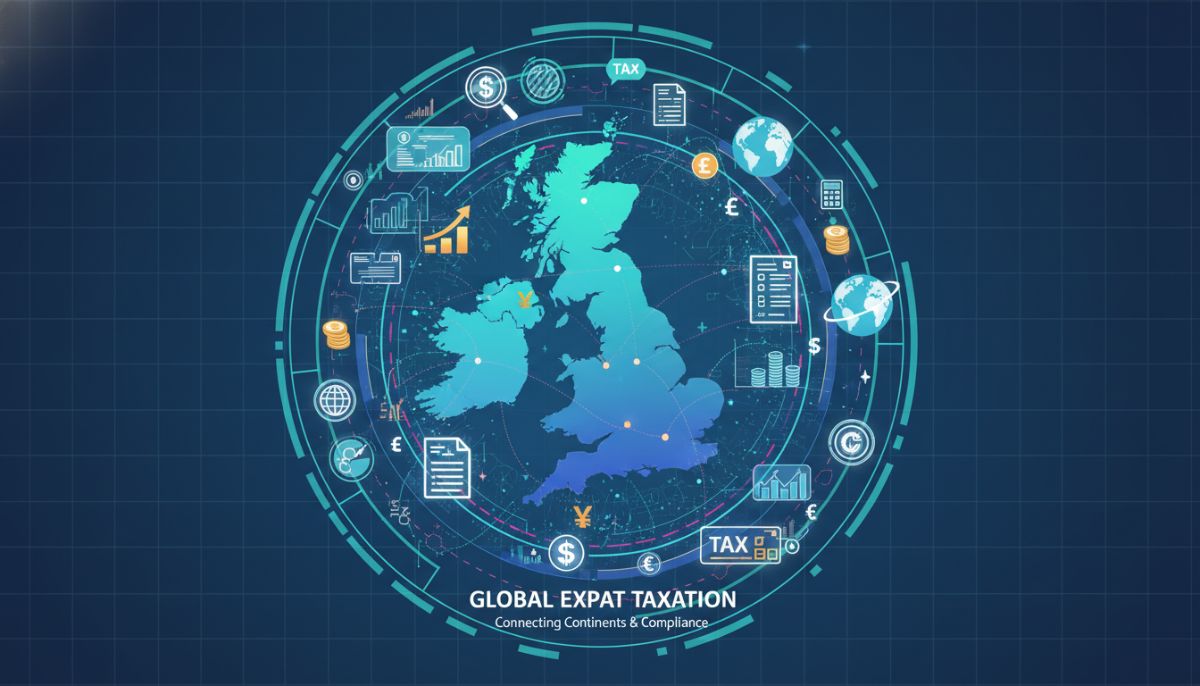
    A conceptual digital graphic showing a map of the UK surrounded by financial icons, tax forms, and globe connections, representing global expat taxation, modern vector style.

    Inheritance Tax (IHT) Shielding

    The UK Inheritance Tax is notoriously aggressive, charging up to 40% on worldwide assets for individuals deemed “domiciled” or “deemed domiciled” in the UK. Specialized planners use trusts, offshore structures, and strategic gifting to protect your estate for future generations.

    Overseas Workday Relief (OWR)

    For eligible expats in their first three years of UK residency, OWR can exempt a portion of their employment income from UK tax, provided the duties are performed outside the UK and the earnings are paid into an offshore account. Setting up this structure requires meticulous planning and bank account segregation before arrival.

    The US-UK Tax Connection (FATCA & FBAR)

    American expats face a unique double burden due to citizenship-based taxation. US citizens living in the UK must file US tax returns annually alongside their UK filings. Expert advisors coordinate between IRS and HMRC rules to ensure foreign earned income exclusions and foreign tax credits are claimed harmoniously.

    How to Choose the Right Expat Tax Advisor in the UK

    When seeking professional tax assistance, look for the following credentials and capabilities:

    1. Cross-Border Expertise: Ensure the firm has specific expertise in both UK tax law and the tax laws of your home country (e.g., dual US/UK tax advisors are essential for American expats).
    2. Professional Qualifications: Look for advisors who are Chartered Tax Advisers (CTA) or members of the Association of Taxation Technicians (ATT) in the UK.
    3. Proactive Communication: The best tax planners do not just look backward at what you spent; they look forward to help you structure future investments and moves.

    Conclusion: Securing Your Financial Future in the UK

    Living as an expatriate in the United Kingdom is an incredibly rewarding experience, but the financial landscape requires careful, expert navigation. By engaging professional tax planning services for expats in UK, you secure peace of mind, safeguard your wealth, and ensure that your global financial affairs are structured in the most tax-efficient manner possible. Do not wait until the HMRC deadline approaches; start planning your cross-border tax strategy today.